
Your Journey Takes Off Here
Some people learn to fly for the pure joy of it. Others are taking the first step toward the airlines. Wherever you're headed, it all starts with your private pilot certificate. Let's get you in the air, and then you decide how far you go.
What Is a Private Pilot Certificate?
The private pilot certificate is the license that lets you fly an airplane on your own and take passengers along for the ride. Once you have it, you can fly for personal trips, business travel, day or night, and go just about anywhere the weather allows. You cannot fly for hire yet, that comes later if you want it, but everything else opens up.
Want to fly your family to a lake house? Split a weekend trip with friends? Or just carve out a Saturday morning above the clouds with nobody but you and the horizon? This is the certificate that makes it real. And if this turns out to be step one of a bigger journey, it is the same foundation every airline captain and corporate pilot started on.

What You Need to Get Started
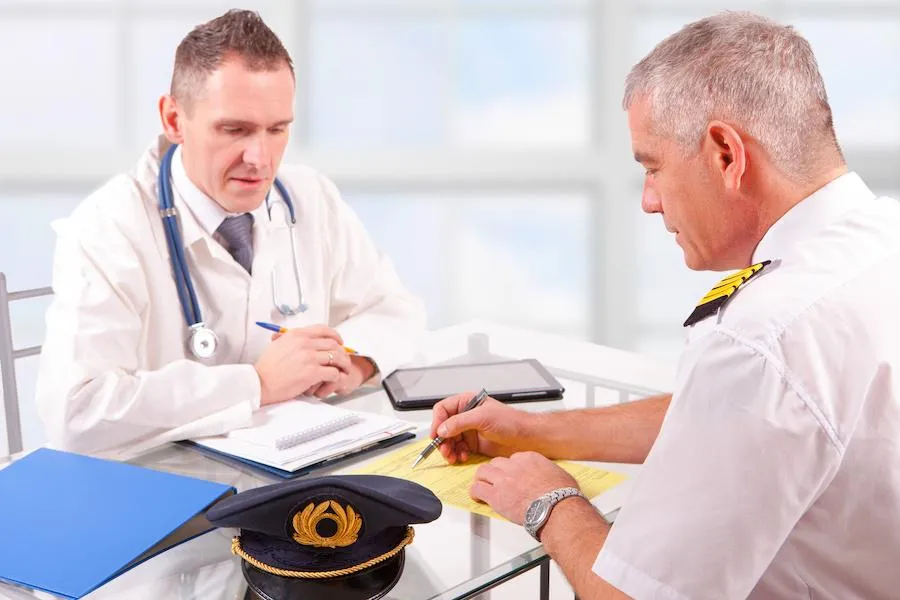
The requirements are more within reach than most people expect. Under Part 61, to earn your private pilot certificate you need to be at least 17 years old, though you can start training earlier and fly your first solo at 16. You need to read, speak, write, and understand English. You need at least a third class medical certificate from an FAA aviation medical examiner. And you need to pass a written knowledge test and a practical test, the checkride, with an FAA examiner.
That is the whole list. No college degree, no prior experience, no perfect vision required. If you can pass a basic medical and put in the work, you can do this. Most people who think they can't are wrong, and it is one of the best decisions they never expected to make.
What You Need to Get Started
The requirements are more within reach than most people expect. Under Part 61, to earn your private pilot certificate you need to be at least 17 years old, though you can start training earlier and fly your first solo at 16. You need to read, speak, write, and understand English. You need at least a third class medical certificate from an FAA aviation medical examiner. And you need to pass a written knowledge test and a practical test, the checkride, with an FAA examiner.
That is the whole list. No college degree, no prior experience, no perfect vision required. If you can pass a basic medical and put in the work, you can do this. Most people who think they can't are wrong, and it is one of the best decisions they never expected to make.
The Flight Time Requirements
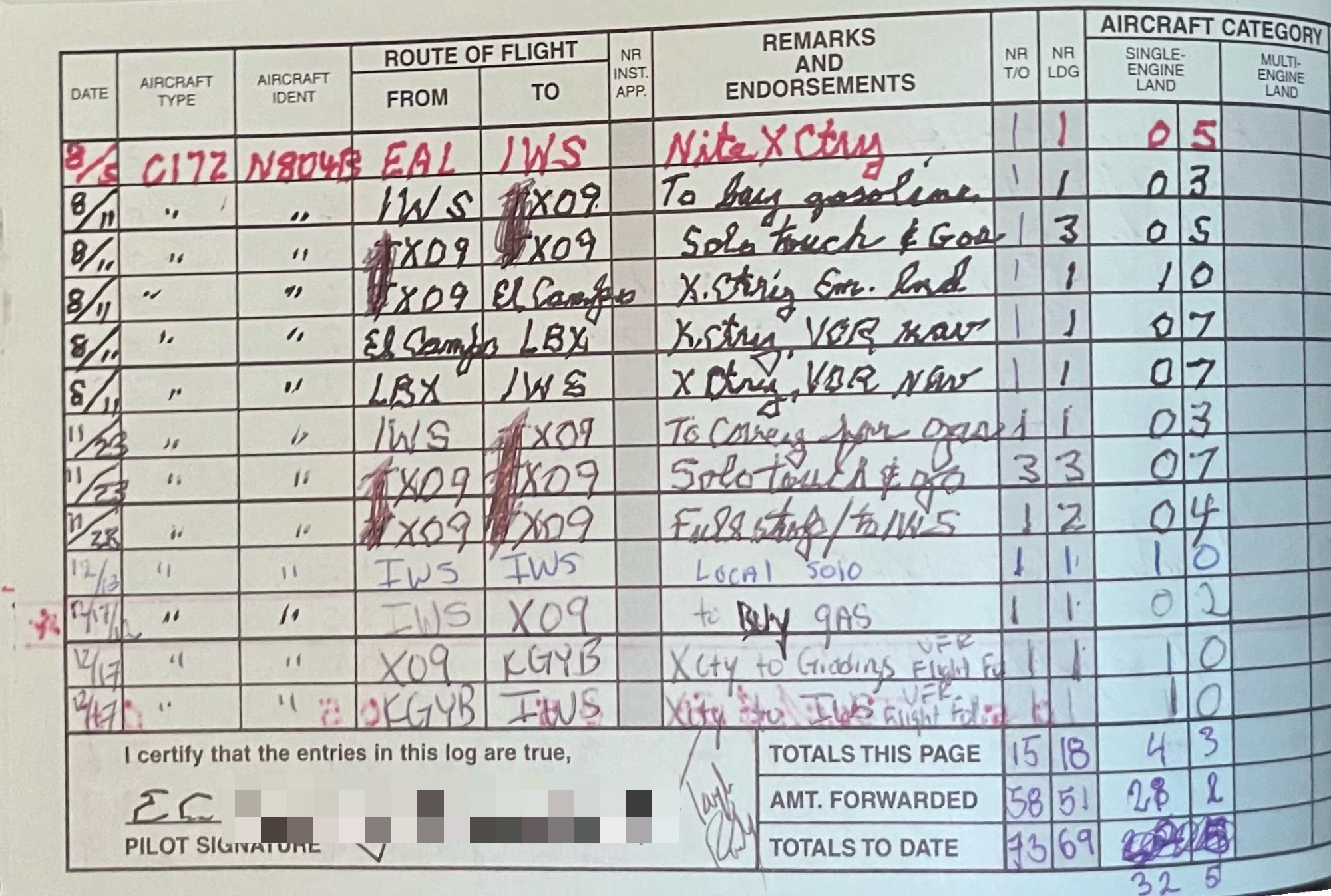
Under Part 61, the legal minimum is 40 hours of flight time. That includes at least 20 hours of training with an instructor and at least 10 hours of solo flight. Along the way you will log cross country flying, night flying, a few hours of basic instrument work, and dedicated practice for your checkride.
Here is the honest part a lot of places gloss over. Almost nobody finishes in exactly 40 hours. The real world average lands closer to 55 to 75, and that is completely normal. Your pace comes down to how often you fly, the weather, and how quickly it clicks. Flying twice a week gets you there far faster than twice a month. I will always give it to you straight on where you stand and what is left in front of you.
What the Training Actually Looks Like
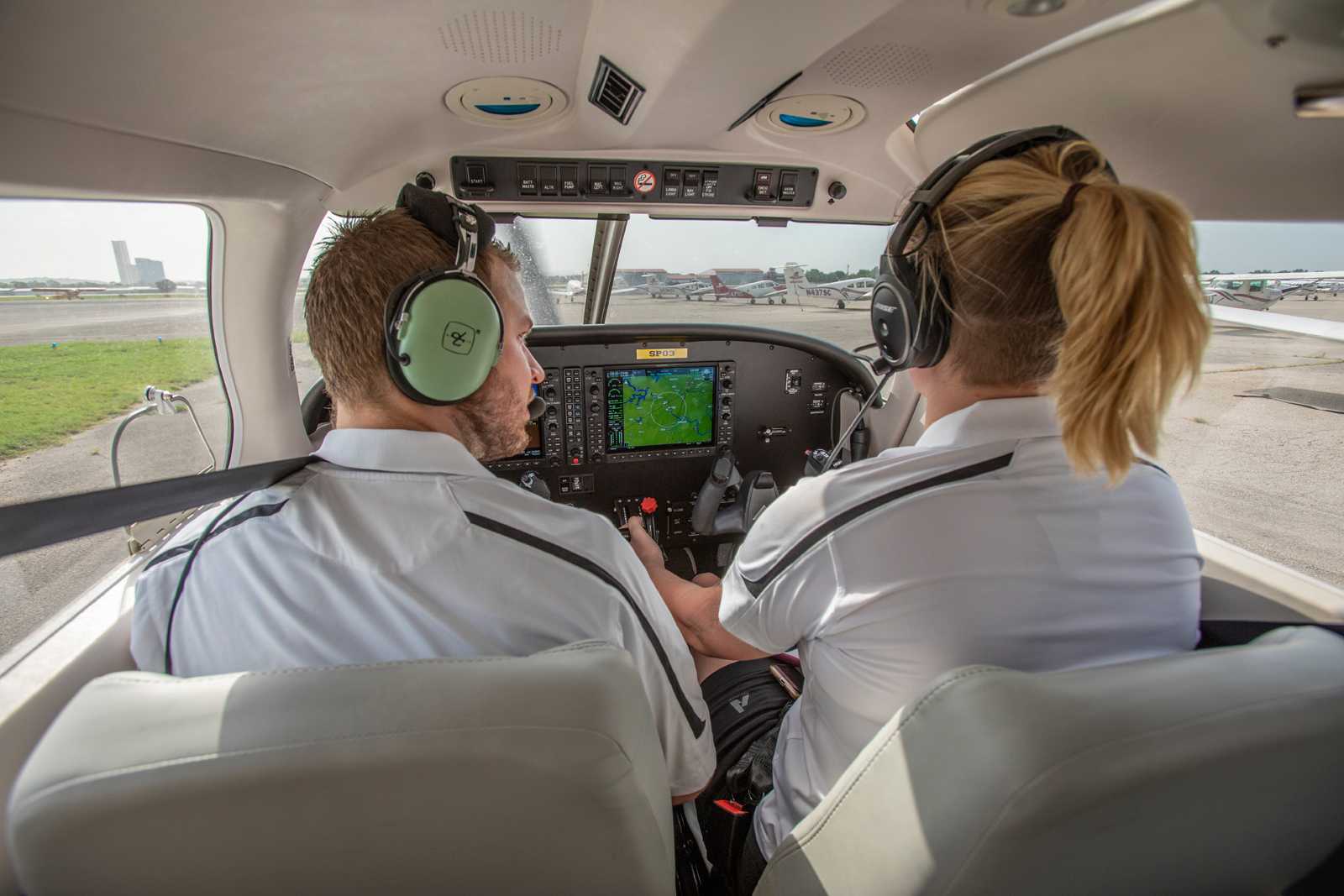
We start with the fundamentals. Straight and level flight, turns, climbs, descents, and then into takeoffs, landings, and how to handle the airplane when things do not go as planned. You will fly real cross country trips to real airports, get comfortable working the traffic pattern, and log time under the night sky. Right alongside the flying, we cover the ground knowledge behind it all, weather, regulations, navigation, and how the airplane actually works.
Then comes the big one. Your first solo, the day I climb out of the airplane and you take it around the pattern by yourself for the first time. There is no feeling in aviation quite like it. From there we sharpen everything up, knock out your written test and checkride prep, and get you fully ready to pass.
What the Training Actually Looks Like
We start with the fundamentals. Straight and level flight, turns, climbs, descents, and then into takeoffs, landings, and how to handle the airplane when things do not go as planned. You will fly real cross country trips to real airports, get comfortable working the traffic pattern, and log time under the night sky. Right alongside the flying, we cover the ground knowledge behind it all, weather, regulations, navigation, and how the airplane actually works.
Then comes the big one. Your first solo, the day I climb out of the airplane and you take it around the pattern by yourself for the first time. There is no feeling in aviation quite like it. From there we sharpen everything up, knock out your written test and checkride prep, and get you fully ready to pass.
A Few Things Worth Knowing
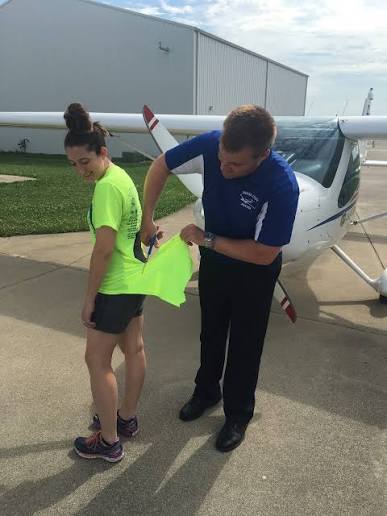
Your first solo is a genuine rite of passage, and yes, the old tradition of cutting the tail off your shirt afterward is still alive and well at most airports. The checkride comes in two parts, an oral exam where the examiner talks through your knowledge, and a flight portion where you show what you can do. Once you pass, your certificate does not expire. You stay current by flying regularly and completing a flight review every two years. And every skill you build here carries straight into the instrument rating, the commercial, and beyond, if you decide to keep climbing.
What Comes Next
For a lot of pilots, the private is the destination, and that is a great place to be. Fly for fun, take the family up, and enjoy the freedom you earned. But if you catch the bug, and plenty of people do, the instrument rating is usually the next step. It lets you fly in a wider range of weather and makes you a sharper, more capable pilot. No need to decide now. Get your private first, and we will talk about what is next when you are ready.
READY TO GIVE US A TRY?
Call now to schedule your first lesson!
Ready to get started? Reach out and let's talk through your goals and get your first flight on the calendar. No pressure, just a conversation about getting you in the air.